Our eyes’ internal lenses change shape to focus on something, but a camera focuses by changing focal length. One of the hallmarks of a professional cinematographer is knowing when to change between common focal lengths to achieve different effects.
This article will teach you what focal length means, including examples of common focal lengths and how you’ll use them. We’ll cover how to calculate a “normal” focal length, and how to use that information to get creative with your shots. And to preserve all the effort you put into those shots, you can host and share your videos in up to 8k resolution on Vimeo.
Understanding focal length and its impact on your frame
One of the many common video terms you’ll hear experts use is focal length — and for a good reason. Knowing how focal length changes a shot’s composition is a major part of leveling up your cinematography skills. Even subtle differences between focal lengths can have a major impact on how you frame a shot.
Focal length defines the distance between a camera’s sensor and the lens. Longer focal lengths, like those of telephoto lenses, have a narrower field of view. They magnify distant subjects and blur the background. Shorter focal lengths, like those in wide-angle lenses, produce a wider field of view and keep the whole frame in focus. Depending on the camera you’re using and its lens’ focal length, you could capture a wide open vista or zoom in for a close shot of a particular tree from the same spot.
How sensor size changes your effective focal length
The size of your camera’s sensor determines the dimensions of the image it captures, which we call its format. 35 mm, full-frame sensors are the most common format in both physical and digital film, but they’re far from the only ones. Crop sensors, like those in Nikon DX or Canon APS-C cameras, are slightly smaller, while medium-format cameras like the Fujifilm GFX100S have much larger ones.
A typical focal length is equal to the diagonal measurement of the image format. For example, a full-frame camera that shoots 35 mm film has an image format size of 36 mm x 24 mm, or a diagonal measurement of 43 mm. So, a normal focal length for a full-frame camera would be 43 mm.
The same calculation also tells you what the focal length is for a medium-format camera (54 x 40 mm = 67 mm) or a one-inch camera (13.2 x 8.8 mm = 16 mm). Once you know the normal focal length for your camera, you can increase or decrease it for your desired focus.
A breakdown of 5 focal length examples
Assuming you have a 35mm full-frame camera, here are the focal lengths of lenses you’ll use to adjust focus and field of view. If your camera has a larger or smaller sensor, adjust the measurements accordingly.
Ultra-wide lenses (under 24 mm)
Ultra-wide lenses have very short focal lengths, meaning they’re very close to the camera sensor. This results in a uniformly focused image that captures a wide field of view — wide enough that it only takes two shots to create a 360-degree video. These lenses make distant objects appear even further away while bringing objects in the foreground forward. They’re great for exaggerating depth and capturing every part of a landscape, like skylines and mountain ranges.
Wide-angle lenses (24 mm to 35 mm)
Wide-angle lenses have shorter-than-average focal lengths and serve many of the same purposes as ultra-wide lenses, only on a smaller scale. Their slightly narrower field of view captures relatively large but constrained surroundings, such as building interiors. Travel photographers use them for the expansive chambers of cathedrals and theaters, while real estate photographers use them to make rooms appear larger.
Standard or normal lenses (45 mm to 55 mm)
A normal focal length lens matches your camera’s format more or less precisely. A “nifty fifty,” for example, is the most common lens because it suits most of the popular camera formats, including the standard 35 mm. As long as your lens is within 10 mm of the format size, you’ll get a 40 to 45-degree field of view, which matches up with our eyes’ typical field of view.
You’ll see these lenses used in every industry, from street photography to marketing shots. With the right adjustments to aperture and depth of field, they’re versatile enough to capture subjects near and far with perfect clarity.
Short telephoto lenses (85 mm to 135 mm)
Longer focal length lenses magnify subjects, putting distant background objects in sharp focus or pulling a near subject from the background behind it. Portrait photographers often use short telephoto lenses because they apply a soft focus to near subjects to create a more intimate, flattering shot.
Super-telephoto lenses (200 mm and above)
Super-telephoto lenses magnify very distant subjects with pinpoint focus, enabling wildlife photographers to capture shots of animals from a safe distance and sports photographers to snap a shot of a single player from the stands. Lining up such a shot takes impeccable skill and timing, so super-telephoto lenses are a rarity even among experienced photographers.
Edit all your shots with Vimeo →
Matching focal lengths to your creative goals
Here are four typical use cases for different lenses, along with recommendations for which type of lens to try.
Architecture and real estate
Ultra-wide and wide-angle lenses make smaller spaces feel more open and inviting by capturing a larger field of view with a sharp, uniform focus throughout. They also exaggerate the space between foreground and background objects by creating the illusion of a greater depth of field.
Note, however, that an ultra-wide lens will cause uncanny distortion in a small space where objects are not far enough away from each other for that illusion to work. If you’re taking photos of a small room or crowded hallway, use a wide-angle lens instead.
Street and lifestyle
Longer wide-angle lenses and shorter standard lenses — anywhere from 35 to 50 mm — are ideal for street photography. They’re great at capturing mid or wide shots with just enough of the background to establish setting.
In situations where the setting is less essential, like culinary photography, a short telephoto lens might come in handy. It’ll apply a soft focus to the subject and help it stand out from a flat background like a tablecloth.
Cinematic interviews
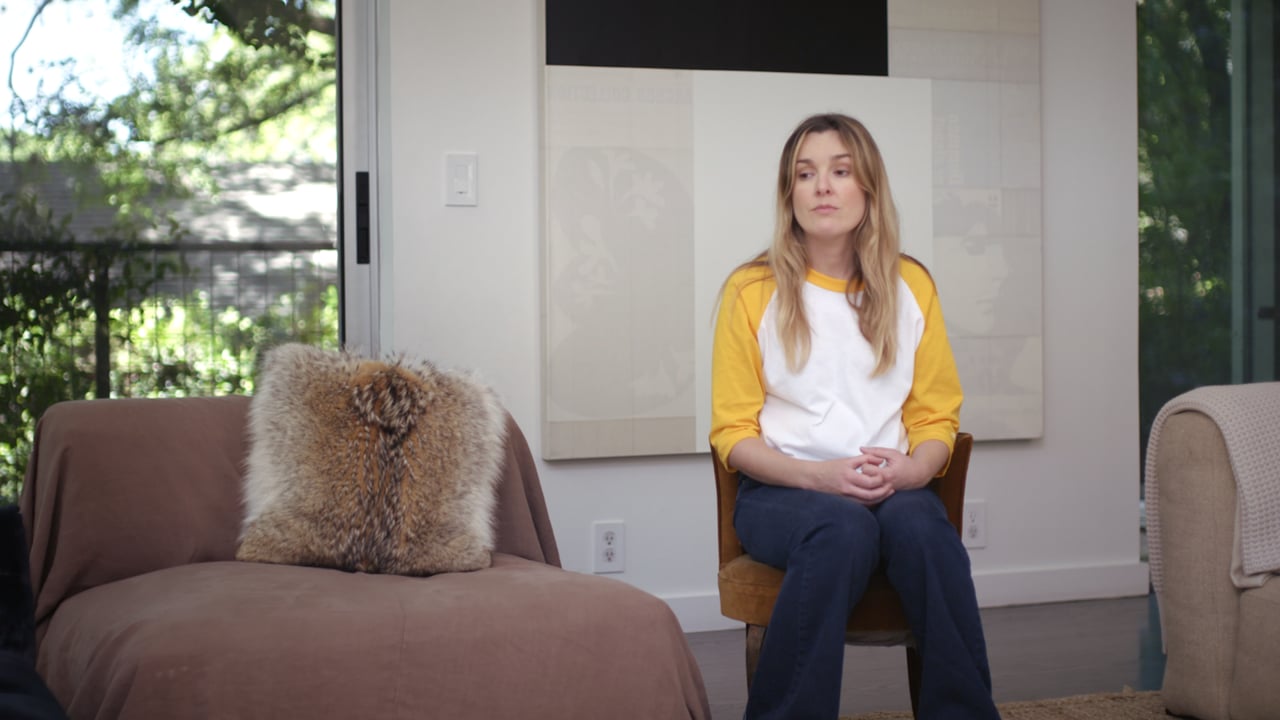
50 mm “nifty fifty” lenses are ideal for cinematic interviews. They provide a wide enough field of view that you can place a sitting or standing speaker along a vertical line, but you can still use them for close-ups without distorting the subject. That versatility means you can try several compositions and shoot an entire interview with just one lens.
Action and events
Taking action shots often means your exact distance from the subject varies, so you’ll want to bring an adjustable zoom lens. The ability to switch from a short to a long focal length lets you change focus and field of view on the fly.
Sports photographers generally use zoom lenses that adjust from 24 to 70 mm to capture mid-shots of athletes or wide shots of audiences without changing lenses. A wildlife photographer, on the other hand, might use a zoom lens that adjusts from 70 to 200 mm to capture particularly alert animals on the move.
Showcase your cinematography in high quality with Vimeo
Capturing video and images with a variety of lenses — and taking the time to work with the footage — is the best way to discover how you’ll use common focal lengths creatively. Once you’ve practiced it and found your favorite applications, using unexpected focal lengths can engage a bigger audience for your video projects.
To share your work with other people, you need a reliable, high-quality video host like Vimeo. With Vimeo, you can upload up to 8k footage with the bitrate and color accuracy needed to preserve all the effort you put into each shot. If you’re committed to truly honing your craft as a cinematographer, Vimeo is the right home for your recordings, where the technical integrity of your original shot can be preserved and shared with confidence.