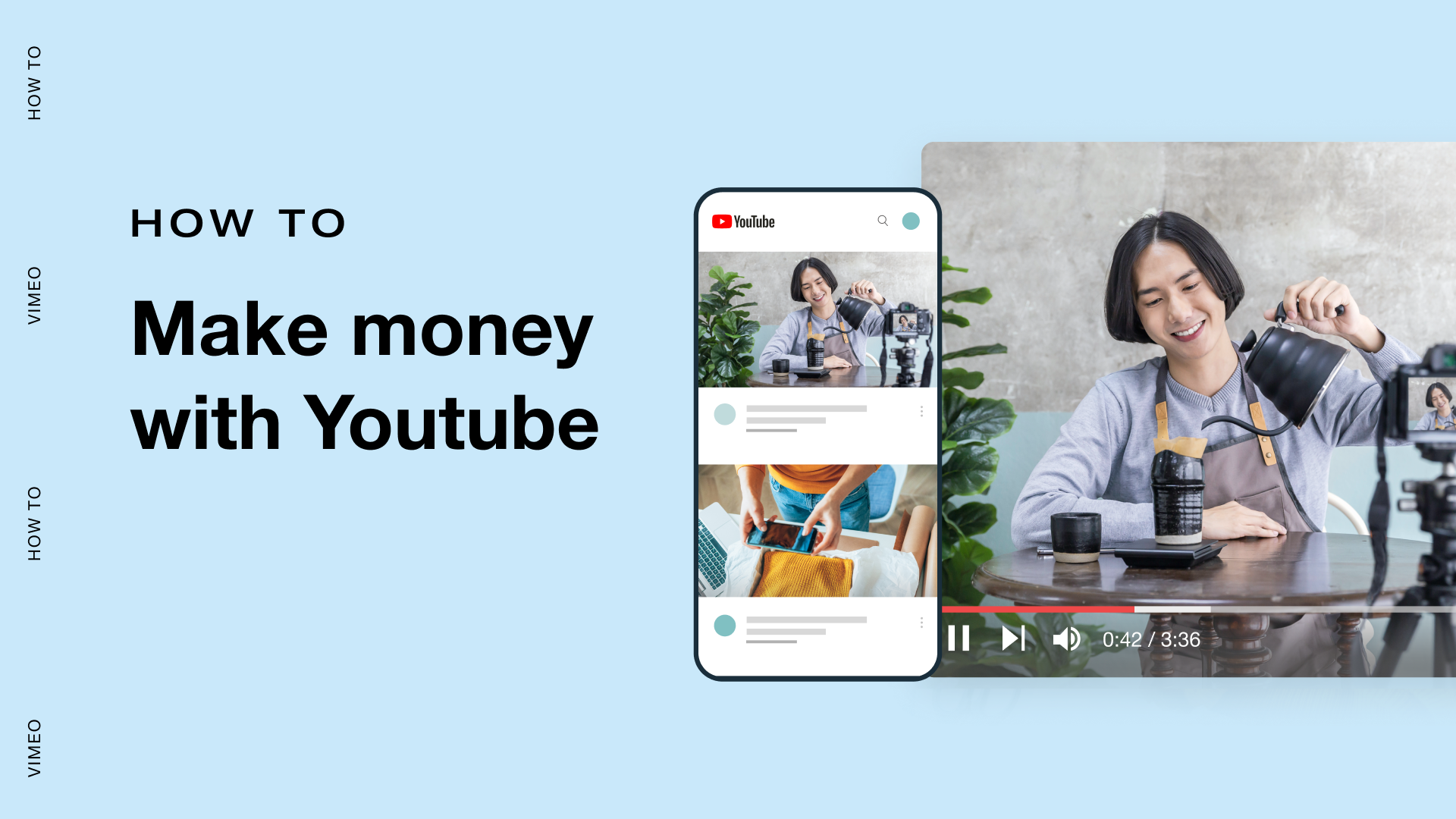
Making money as a YouTuber comes down to two basic principles: YouTube rewards channels that keep viewers watching, and creators earn more consistently when they stack multiple revenue streams instead of relying on one.
In this article, we’ll explain how to make money on YouTube, when they start paying, and what successful creators do to build income beyond ad revenue.
When does YouTube start paying you?
YouTube doesn’t pay everyone who uploads videos. YouTube channels start earning income once you qualify for the YouTube Partner Program (YPP) and turn on monetization for the features you’re eligible to use.
There are two common eligibility paths:
- Earlier access (fan funding and select Shopping features): In most countries, you can apply when your channel has 500 subscribers with three valid public uploads in the last 90 days, as long as you also have either 3,000 valid public watch hours in the last 12 months or three million valid public Shorts views in the last 90 days.
- Revenue sharing (ads and YouTube Premium): To earn money from ads and YouTube Premium, you’ll need 1,000 subscribers and either 4,000 valid public watch hours in the last 12 months or 10 million valid public Shorts views in the last 90 days. There’s no minimum upload count for this path.
YouTube counts watch time from public long-form videos toward the watch-hour threshold. Watch time tied to private, unlisted, or deleted videos won't contribute while those videos aren't public. If you re-list a video, the watch hours will count again.
These numbers may seem arbitrary, but they signal genuine engagement and compliance with YouTube’s policies. Watch time shows that viewers are interested in your work and stick around, telling advertisers your audience is real and engaged. More watch time also creates more opportunities to place ads, especially on longer videos that can include mid-roll ads.
The watch hour milestone also gets simpler with some math. 4,000 watch hours equals 240,000 minutes. If 8,000 viewers watch your video for 30 minutes, that’s 240,000 minutes, or 4,000 hours. Different channels get to that figure in different ways, but to monetize your channel faster, you need watch time, not clicks.
If you’re thinking beyond your first check, it’s also worth understanding YouTube’s brand risk and why some creators avoid relying on YouTube alone to build their brand.
Build your brand with Vimeo →
How do you get paid on YouTube?
Once your YouTube channel qualifies for the YPP, getting paid comes down to a few practical steps. Here’s what you’ll need to do to start earning.
Join the YouTube Partner Program
Start in YouTube Studio and open the “Earn” tab. From there, you can apply to join the YPP once your channel meets eligibility requirements in your region. After YouTube reviews and approves your application, you can turn on monetization features like ad revenue sharing and revenue tied to YouTube Premium watch time.
Set up Google AdSense
To receive payouts, you’ll need an AdSense account — specifically AdSense for YouTube. If you already have one, link it to your channel during YPP setup. If you don't, you’ll have to create and connect one so YouTube can send earnings to the right place. There aren’t alternate payment options you can link at this time.
Payment method
Even after you start to make money, you won’t see a payout immediately. AdSense only pays out after you hit the minimum earnings threshold, which is generally $100. If you’re under that amount, the balance rolls over to the next month.
Payment timeline
YouTube tracks earnings by calendar month. After the month ends, YouTube calculates what you made, then posts those finalized numbers into AdSense early in the following month. If you’ve met the $100 threshold, AdSense typically releases the payment later in that same month (generally between the 21st and 26th).
For example, if you made $150 in January, you might see that figure posted on AdSense on February 5, then get paid around February 21. If you only made $75 in January, however, that $75 would roll over into February’s potential payout.
After you’ve set everything up, your earnings will likely vary, especially in the early stages of monetization. These factors usually drive the biggest differences in pay:
- Viewer engagement and watch time: When more people spend time with your content, YouTube has more reason to recommend your videos, so you may see more opportunities to serve ads.
- Video length and ad placement options: Longer videos have more opportunities for ad placements. For example, most videos that are eight minutes or longer qualify for mid-roll ads, raising total ad revenue.
- Subscriber count and audience growth: More subscribers can boost your baseline views because returning viewers are more likely to watch new content you publish faster.
- Community building and niche focus: A clear niche and channel identity tends to attract the same type of viewer, forming a community, improving content consistency, and making your channel more appealing to advertisers.
6 tips for successfully selling on YouTube
If your goal is to earn money from a YouTube channel without putting everything on one revenue source, think in layers. You can monetize through ads, viewer-supported features, and off-platform offers, then tighten what works based on what your audience watches.
Here are six ways to improve your chances of making money from your channel:
- Turn on ads where they fit your content: Ad placements drive revenue, but only if your videos keep viewers watching long enough for ads to play. Stuffing a video with ads makes it more likely for viewers to move on, so be mindful about where and how often you place ads. Adding video captions can keep viewers watching longer, especially if they’re scrolling Shorts on mute. Strong YouTube SEO also brings in viewers who are looking for content like yours and will be more likely to watch for longer.
- Aim for longer videos when the topic supports it: Videos that are eight minutes or longer can qualify for mid-roll ads, creating more opportunities for ads during a single view. Don’t stretch content to hit a number, as it can hurt your content quality and viewership, but do treat length as leverage when you have something worth covering.
- Monetize YouTube Shorts intentionally: Shorts can be monetized through revenue sharing, and YouTube Premium viewership also contributes to Shorts earnings. If Shorts are part of your strategy, you’ll need to change your content style — Shorts are a format with unique pacing and hooks. Try a highlight video of your main content, for example.
- Enable fan funding: Features like Supers and memberships let your community support you directly. They tend to work best when your brand has a clear identity and people know what (and who) they’re backing.
- Sell products and merchandise that match your niche: Like fan funding, merch sells more easily when it matches what your channel stands for. Build the offer around your channel’s “why,” then use pinned comments, descriptions, and end screens to drive clicks.
- Collaborate with brands as an influencer: Sponsorships can beat ads for predictable income. Keep your pitch simple, show your audience fit, and only take offers you’d use yourself, because an awkward brand deal can cool engagement fast.
If you’re building revenue beyond YouTube, your video hosting platform also matters. Vimeo gives you professional video hosting and a clean, controlled video player, plus creation tools like a text-based video editor and an image-to-video converter, so you can produce, publish, and share without juggling a pile of separate tools. Different platforms attract different audiences, and this breakdown of Vimeo and YouTube’s video SEO capabilities shows why creators often see bigger differences between platforms (meaning more opportunities for revenue long-term).
Build a fully customized viewing experience with Vimeo →
FAQ
How long does it take to make money on YouTube?
It depends on how quickly you hit YPP eligibility. Channels get there faster when viewers watch longer and come back for more videos. If you’re close but haven’t broken through yet, focus on retention and repeatable content.
How often does YouTube pay?
Earnings run on a monthly cycle. After YouTube finalizes the prior month's revenue, it flows to AdSense, then pays out toward the end of the following month if you’ve met the threshold. If you’re under the minimum, the balance carries over to the next month.
How can you earn money during live streams on YouTube?
Live streams can earn through ads and viewer support features (like Supers), as long as your channel has those monetization options enabled. Creators often see the best results when the live stream has a clear purpose, like a Q&A session, demos, or a scheduled series.
Diversify your video hosting with Vimeo
It’s possible to make money from YouTube, whether you’re getting your first channel off the ground or trying to turn your passion project into a reliable income stream. Once you understand how monetization works and which strategies fit your content, you can build a creator business that grows over time.
It’s also smart to protect the work you've already put in and see where else it might thrive. Back up your most important videos, then consider an alternative hosting option like Vimeo when you want a more controlled, professional viewing experience beyond YouTube. Using Vimeo’s video library also makes it easier to manage your best videos, organized and ready to reuse.